
Blog EVD Guides Open Questions
EVD Open Questions and Confirmed Facts

Separating the known from the missing

Enhanced Versatile Disc (EVD) research is uneven: some commercial and legal facts are multiply attested, while neighbouring questions that collectors naturally ask, exact model lists, named titles, container layout, codec of shipping discs, remain open. Separating the two is the point of this post. Confirmed items below are those the located English press, Chinese reference pages, E-World material and On2 SEC filings support. Unresolved items are framed as questions, not as guesses. Source conflicts that cannot yet be measured are kept as open disagreements rather than collapsed into a single settled story.

Confirmed facts

  1. Launch date and place. EVD was launched on 18 November 2003 at the Great Hall of the People with On2 VP5/VP6 announced and LSI Logic claiming the first HD EVD chips (EDN).
  2. On2 contract trail. The On2 contract terms, arbitration dismissal (10 March 2005) and unpaid 2006 settlement are documented in SEC filings.
  3. File-system standard entry. SJ/T 11299.2-2005 (file system) exists with 18 February 2005 dates, drafted by E-World and Shinco (standards platform).
  4. First player. The Shinco EVD-8700 was the first EVD player (1 January 2004, ¥1,998) and for a time the only one on sale (c114; Baidu).
  5. Named 2004 models. The Shinco EVD8830 and SVA EVD388 existed in 2004 (E-World material).
  6. December 2006 relaunch scale. The December 2006 relaunch showed about 54 players from about 20 makers at about ¥700 (AP).
  7. E-World software set. E-World had five software packages including an EVD disc authoring system and an OGT subtitle system (E-World material).

These seven points already constrain collecting. A deck without a period model story is not automatically “EVD” because a modern carton printed the three letters. The EVD-8700 / EVD8830 / EVD388 names are the documented early SKUs; the December 2006 “about 54 players” claim is a relaunch-era count, not a full serialised inventory. SJ/T 11299.2’s existence proves a file-system standard was filed; it does not put the full text of parts 1-4 into public hands. On2’s SEC trail proves contractual failure modes without proving which codec ultimately shipped on commercial discs.

What “confirmed” does not mean

Confirmed does not mean complete. The 18 November 2003 launch is attested; a title-level disc list from that day is not. VP5/VP6 was announced at launch; shipping-disc codec identity remains contested against later MPEG-2 MP@HL reporting. The EVD-8700’s first-player status is attested; the eleven launch players sometimes mentioned elsewhere and the fifty-four relaunch players are not inventoried by model here. E-World’s five software packages are named in secondary coverage; the binaries themselves are missing from public archives. SJ/T 11299.2’s catalogue dates are attested; whether the whole SJ/T 11299 family is still “current” or “withdrawn” is unresolved below.

Still unresolved

  • Which video codec shipping EVD discs actually use (MPEG-2 MP@HL-based vs VP6 vs other). Launch EDN coverage and later EE Times coverage disagree; keep both.
  • EVD directory and file names; container format.
  • Actual video bitrates of commercial discs.
  • ExAC bitrates, channel modes and whether it relates to Coding Technologies’ work.
  • The encryption scheme; whether any disc shipped with AACS.
  • Region coding, menus and navigation.
  • LSI Logic part numbers used in EVD players.
  • Model numbers of the 11 launch players and 54 relaunch players.
  • Any HD-EVD (2008) model.
  • A title-level disc list with 版号.
  • CNIPA patent numbers and the truth of the 2006 patent-pledge reports.
  • The “Hao Jie incident” of 2006.
  • Whether E-World ever paid the On2 settlement after 2009, and E-World’s corporate fate.
  • Current status of SJ/T 11299 (“current” vs “withdrawn”).

How to use the open list

Each unresolved item suggests a different next archive. Codec identity points at imaging a commercial disc and publishing ffprobe output after any decrypt path becomes available, and at re-reading EE Times 2006 beside EDN 2003 without forcing a premature synthesis. Directory and container work needs a published UDF file tree from a marked disc. ExAC questions need the SJ/T 11299.4 text or an E-World audio tool. Encryption and AACS questions need either the PC player binary (影海风雷 / E-World package) or a drive-authenticated read log. LSI Logic part numbers need board photographs from genuine players, not keyword-labelled portable DVD players from modern JD listings. Model inventories need 2004 and December 2006 retail photography and alliance press packs. HD-EVD needs 2008 product pages that name a chassis. Title and 版号 work needs Kongfz/Xianyu disc photography and national audio-video database queries. Patent-pledge claims need CNIPA record pulls. The Hao Jie incident needs the Huaqiang interview trail plus contemporary big-bit alliance reporting. On2 settlement and E-World fate need post-2009 corporate and SEC follow-up. SJ/T status needs a fresh standards-platform check against the existing 11299.2 catalogue entry.

Open disagreements to preserve

Two conflicts deserve explicit preservation as disagreements. First, video codec: November 2003 English launch coverage centres On2 VP5/VP6, while November 2006 EE Times relaunch coverage describes MPEG-2 MP@HL for commercial interest. Until measured streams from marked discs exist, both notes remain research status. Second, catalogue size: early counts of about 12-14 titles sit beside a Gome salesperson’s “hundreds,” E-World’s “more than 100,” and EE Times’ “about 100.” Those figures are kept side by side in the catalogue post; they reappear here only to warn that “confirmed launch” does not mean “confirmed filmography.”

A third soft disagreement sits behind player counts: “only EVD-8700 on sale” language in early reference pages, named EVD8830/EVD388 existence in 2004 E-World material, and AP’s December 2006 “about 54 players from about 20 makers.” Those are different moments, not a single contradictory census. Do not flatten them into one number.

A working research posture

The confirmed set is enough to begin serious collecting and dumping: know the launch date and On2/LSI Logic launch claims, know the On2 SEC contract trail, know that SJ/T 11299.2 exists on the standards platform, know the EVD-8700 first-player story and the EVD8830/EVD388 names, know the December 2006 relaunch scale language, and know that E-World shipped a professional software story including authoring and OGT tools. The unresolved set is enough to stop false catalogue and silicon inflation: no public container map, no measured bitrate table, no open ExAC decoder, no proven AACS-or-not answer, incomplete model lists, no HD-EVD SKU in hand, no title-level 版号 list, and unsettled patent-pledge and corporate-fate questions.

Modern shop keyword “EVD” still does not equal genuine 2004-2008 EVD with LSI Logic. Future posts in this series should promote an item from “unresolved” to “confirmed” only when a primary document, a measured disc, or a photographed SKU supports the move. Demoting a confirmed item should be equally explicit if a better primary source contradicts the press or FAQ summary used here. EVD history will not be completed by smoothing over gaps; it will be completed by filling them with the same discipline that already secured the seven facts above.


Further reading on historic video formats

If you want to learn more about historic video formats, get The History of Physical Video Formats from the Frontier by Stephen Driver on Amazon:
Blog Community Sources EVD Guides
EVD Community Sources: Forums, Press and Archives

Where EVD knowledge actually lives

Enhanced Versatile Disc (EVD) never acquired a single official English handbook that collectors could treat as canonical. What survives is a scattered archive: English trade-press pieces from 2003-2006, Chinese encyclopaedia and FAQ pages, contemporary Sina and PjTime reporting, a thin set of enthusiast forum threads, and SEC exhibits from On2. This post maps those communities and documents by what they contribute, not as a raw link dump, but as a research map of who argued what, when, and with which technical claim.

English press spine

Date Outlet Title / content
18 Nov 2003 EDN (Junko Yoshida) “China unveils its own video format”: VP5/VP6, LSI DoMiNo, McIntyre quotes
24 Nov 2003 EE Times / EDN “China’s EVD spec enters digital video fray”: codec options, AVS, “reincarnation of VCD”
Nov 2003 CBS News (AP) “China Declares War On DVDs”: Wang Jingchuan, ¥2,000, 25 patents
25 Feb 2005 The Register “China favours EVD over DVD”: standard, 3C lawsuit
Nov 2006 EE Times (Cai Yan) “EVD backers try to reignite interest”: MPEG-2 MP@HL, sales, single chip vendor
6 Dec 2006 AP (Fox News, NBC) “China tosses third competitor into DVD format war”: 54 players, ¥700, 2008
Dec 2006 TechRadar “Chinese to challenge Blu-ray and HD DVD”
2003-2009 SEC EDGAR (On2) Contract exhibits and arbitration disclosures

Read as a sequence, the English arc moves from November 2003 launch coverage that foregrounded On2 VP5/VP6 and LSI Logic, through 2005 standard-and-lawsuit framing, into November-December 2006 relaunch coverage that named MPEG-2 MP@HL, roughly fifty-four players, and a roughly ¥700 price band. Those codec stories disagree across years and must stay side by side in technical posts; the press table is the citation spine, not a reconciled specification. On2’s SEC EDGAR trail is the primary Western document set for contract terms, arbitration dismissal and settlement language.

Chinese press and reference

Source Content
Chinese Wikipedia 增强型通用光盘 Timeline 1999-2005, AACS, PC player, ST/NME/AVS deals
Baidu Baike evd Dazhong experience hall, price history, HD-EVD 2008, alliance structure, HVD rivalry
c114 通信百科 EVD EVD-8700 only model, nine-member alliance, royalty figures, Jindian Global
E-World FAQ “EVD科普知识问答” (siga.org.cn) Brands on sale, prices, shareholders, HD claims
PjTime “何为EVD?EVD与HDTV的区别在那?” (2007) Five software packages, EVD388/EVD8830, publishers, ExAC score
ZOL reprints and interviews “何为EVD” (2009 reprint); Zhang Baoquan interview; “三大民族品牌高清碟机标准之争”
Sina (2005-2006) ¥3-5 discs; five measures; crisis and relaunch cluster around Dec 2006
PjTime / Nanfang Daily (Aug 2007) “EVD 的梦该醒了” collapse piece
Yicai “EVD盟主倒了” Shinco restructuring
big-bit 28615, 12870, 6138 Alliance meeting; EVD camp contradictions
Huaqiang hqew 107924 E-World backers, Hao Jie interview
gzhifi (2008) “带你认识什么是高清EVD”: 14 first titles, “true HD”
Sohu 2019 retrospective “十年风雨路,中国影碟机的辉煌和陨落”
Douban note 876697066 Collection of EVD/HDV/HVD news reports

Chinese Wikipedia and Baidu Baike are secondary synthesising pages: useful for chronology and for names of halls, alliances and HD-EVD 2008 branding, but they must be checked against Sina, PjTime, EE Times and SEC when dates or codec claims conflict. The E-World FAQ on siga.org.cn is the closest thing to a vendor self-description of brands, prices and HD claims. PjTime’s 2007 explainer remains the densest single Chinese technical overview for software packages, named models (EVD388, EVD8830), publishers and ExAC talking points. c114’s encyclopaedia entry preserves the early “EVD-8700 only model” retail note and alliance/royalty language that hardware posts rely on.

News clusters matter as clusters. Sina’s March 2005 ¥3-5 disc promise, October 2005 “five measures,” September 2006 crisis reporting and the December 2006 relaunch burst are contemporary temperature readings, not later nostalgia. Nanfang Daily via PjTime in August 2007 (“EVD 的梦该醒了”) and Yicai’s Shinco restructuring piece document collapse and corporate aftermath. big-bit alliance reports and the Huaqiang Hao Jie interview preserve internal-camp friction language, including the “Hao Jie incident” still listed as unresolved elsewhere. gzhifi’s 2008 “true HD” piece is the source for Jindian’s fourteen-title first release claim. Douban note 876697066 is a collector-assembled clipping file for EVD/HDV/HVD reporting rather than a primary newspaper.

Later reprints

CSDN (2009) and 中国视听网 (2010) reprints of E-World-related material keep FAQ language circulating after original pages move. Prefer the earliest live or archived copy you can find when wording conflicts. ZOL’s 2009 “何为EVD” reprint and standards-battle features likewise often echo PjTime and FAQ text; use them for discovery, then walk citations back.

Forums

Forum Thread Note
非常发烧网 (hifi168) “EVD,大家听说过吗?有谁开始使用?” (19 Nov 2003) Contemporary enthusiast reaction
隔壁网 (gebi1) “骗局还是谎言?揭露国产’高清’EVD!” Critical thread; blocked to automated access; not read
DVD Talk “Forward Versatile Disc (FVD)” FVD/Sigma press-release discussion
PjTime forum Linked from EVD articles Not searched

English enthusiast depth for EVD is thinner than for CVD or SVCD. hifi168’s 19 November 2003 thread catches Chinese enthusiast reaction within a day of the Great Hall launch. The gebi1 critical thread is logged as existing but unread because automated access was blocked. DVD Talk’s FVD thread is adjacent Taiwan-format discussion, not EVD primary evidence; it belongs on the related-formats shelf. PjTime’s own forum links from EVD articles remain unsearched and are a natural next pass for model and disc anecdotes.

Gaps still empty

Several high-value Chinese channels have not yet been searched for EVD material: Xianyu, Taobao, Baidu Tieba (影碟机吧, 高清播放机吧), Bilibili teardown videos, CNKI journal articles, CNIPA patents, archived evd.cn and jdglobal sites on the Internet Archive, AVSForum and CDFreaks threads. Those remain the places a named disc 版号, a board photograph of LSI Logic markings, or a surviving PC-player installer is most likely to surface.

Community source work for EVD is therefore unfinished by design. English trade press and On2 SEC filings preserve the Western launch and contract story; Chinese FAQ, encyclopaedia and Sina/PjTime reporting preserve retail, alliance and collapse language; forum threads preserve enthusiast suspicion and excitement; and the empty second-hand, Tieba, CNKI and Archive.org shelves are the next places catalogue and hardware posts should look before inventing titles or chip part numbers. Until those shelves are searched, cite the article, the FAQ or the SEC exhibit, and leave the gap visible.


Further reading on historic video formats

If you want to learn more about historic video formats, get The History of Physical Video Formats from the Frontier by Stephen Driver on Amazon:
Blog Buying & Sourcing EVD Guides
Where to Buy EVD Players and Discs

Current market reality

No confirmed listing of a genuine Enhanced Versatile Disc (EVD) player or a commercial EVD disc was found on JD, Suning, eBay, Kongfz or Chinese Wikipedia-linked shops in the research passes behind this series. Current searches for “EVD” on JD and Suning return DVD players, portable DVD players and Blu-ray players. That keyword collision is the central buying hazard: modern EVD retail language is not the same thing as a genuine 2004-2008 EVD deck with LSI Logic decode.

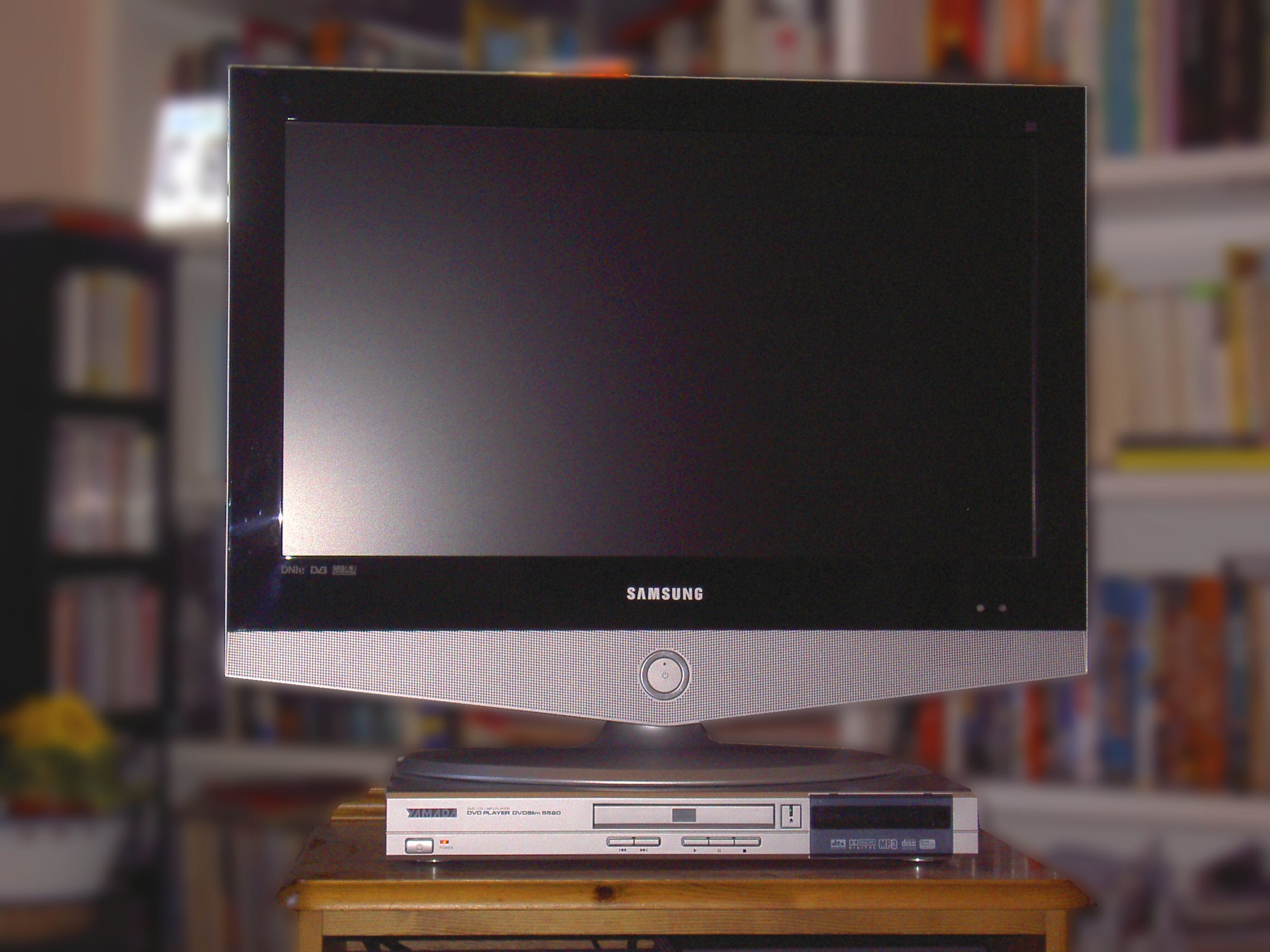
Ordinary DVD player beside a television, illustrating that EVD-labelled decks today are usually standard DVD hardware
EVD-labelled decks offered today are usually ordinary DVD players. Photo: Ma8thew, Wikimedia Commons, CC BY-SA.

What current platforms actually show

Platform What to expect Source
JD (京东) “EVD” used as keyword on DVD/Blu-ray players; filter by brand and year JD
Suning (苏宁易购) Same pattern; e.g. Jinzheng portable “evd” DVD players at ¥369-519 Suning
Kongfz (孔夫子旧书网) Second-hand shops with large out-of-print disc categories; best chance for period EVD discs Kongfz VCD/disc category practice
Xianyu (闲鱼) Second-hand players and discs; not searched in this set –
Taobao second-hand Not searched –
eBay Chinese-region DVD players occasionally listed; no EVD found –

Kongfz remains the most promising Chinese-language place to look for period discs because its second-hand shops already organise large out-of-print film categories. Sellers may still misuse “EVD” as a vague high-definition adjective. Photographs of the disc face, EVD logo, publisher mark and 版号 matter more than the search keyword. Xianyu and Taobao second-hand were not searched here and remain high-priority next channels precisely because JD/Suning/eBay already returned no confirmed genuine objects.

Jinzheng portable players advertised with an “evd” keyword in the ¥369-519 Suning band are useful as negative examples. They show how the three letters still sell in Chinese retail search, and they show how far that marketing language has drifted from 2004-2008 living-room EVD with LSI Logic silicon and component HD outputs. Treat them as ordinary DVD/portable DVD hardware unless a seller can prove otherwise with model numbers from the period list below.

Historical retail channels (2004-2007)

Channel Role Source
Gome (国美) Launch channel; chair of 2006 alliance; 30 EVD stores planned pass 1; Baidu
Dazhong (大中电器) First EVD HD experience hall, June 2004 Baidu
Suning (苏宁) Listed by E-World as a retailer; later refused EVD as “fake HD” E-World FAQ; pass 1
Yongle (永乐) Listed by E-World E-World FAQ
Manufacturer counters Shinco, Amoi department-store counters E-World FAQ
搜E网 Planned online EVD store (2006) pass 1
800 disc outlets Planned (2006) pass 1

Historical geography explains where survivors may still hide. Gome was both a launch channel and, later, chair of the 2006 alliance that planned thirty EVD stores. Dazhong’s June 2004 HD experience hall is an early public demonstration node. E-World’s own FAQ listed Suning and Yongle among retailers even as other reporting notes Suning later refusing EVD as “fake HD.” That Suning contradiction is itself a buying lesson: a chain name that appears in vendor FAQ copy is not automatically a friendly modern stockist for genuine discs. Manufacturer counters for Shinco and Amoi matter because period hardware often moved through brand floors rather than through a single EVD specialist chain. Planned 2006 outlets (搜E网 online; eight hundred disc outlets) are capacity pledges, not proof that those nodes still hold stock today.

When a second-hand seller claims a machine “came from Gome” or “was from a department-store counter,” ask for carton photos, warranty cards and model stickers rather than accepting the story alone. Launch-channel provenance is historically plausible for Shinco and alliance-era decks; it is also easy to invent in a listing title. The same caution applies to discs said to be “Jindian Global from 今典” without a readable publisher mark in the photograph.

Search terms that actually help

Language / focus Terms
Chinese, players 新科 EVD-8700; 新科 EVD8830; 新科 EVD-327; 上广电 EVD388; EVD影碟机 2005; EVD高清碟机 老; 真高清 EVD 碟机; EVD 播放机 LSI
Chinese, discs EVD碟片; EVD光盘 正版; 今典环球 EVD; 中凯 EVD; 中影 EVD; EVD 高清影碟; HD-EVD 碟片
English Enhanced Versatile Disc; EVD player Shinco; EVD disc Jindian; HD-EVD

Model-linked Chinese queries outperform the bare acronym. Shinco EVD-8700, EVD8830 and EVD-327, and SVA (上广电) EVD388, are period SKUs named in E-World and reference material. Adding LSI to player searches targets the decode silicon story rather than keyword-stuffed portable DVD players. Disc queries that name Jindian Global, Zhongkai or China Film outperform generic “高清影碟” alone.

Filter out listings after 2009 and anything describing a “DVD播放机” with “EVD” merely appended. Ask sellers for a photo of the disc tray area showing an EVD logo and of the rear panel showing component HD outputs. Those two photographs separate living-room HD EVD hardware from ordinary DVD chassis that borrowed the three letters for search ranking.

Buying recommendations

  1. Buy genuine players only with the model number visible (EVD-8700, EVD8830, EVD-327, EVD388) and ideally with a commercial EVD disc included.
  2. Buy discs only with a visible Jindian Global, Zhongkai or other listed publisher mark and an EVD logo.
  3. Image discs immediately on receipt using the preservation workflow in this series.

A realistic first shopping list is therefore not a JD portable “evd” DVD player in the ¥369-519 band. Those machines document how the keyword is abused, not how 2004-2008 LSI Logic EVD worked. Budget instead for seller photo requests, Kongfz trawls through out-of-print disc lots, and immediate imaging time if a marked disc appears. Historical channels (Gome, Dazhong, Yongle, Shinco/Amoi counters) explain why survivors may surface as undifferentiated “old Chinese HD disc player” lots rather than as museum-labelled EVD artefacts.

If a candidate player arrives, verify the rear panel for component HD outputs, open or photograph the decode board for LSI Logic markings when safe, and test with an ordinary DVD first so you know the laser path works before you risk a scarce EVD title. If a candidate disc arrives, refuse to play it heavily before imaging: the preservation post’s ISO, hash, file-tree and dual-player test package is the purchase receipt that later research can reuse. Bundled player-plus-disc lots are especially valuable when both objects can be authenticated together, because period marketing often joined hardware sales to content supply.

Until a seller photographs a disc face with an EVD logo and publisher mark, or a chassis with a documented period model number and component HD outputs, every purchase remains an authenticity experiment. That is the honest market condition for EVD in the mid-2020s: the three-letter keyword is plentiful; confirmed 2004-2008 objects are not yet on the searchable shelf.


Further reading on historic video formats

If you want to learn more about historic video formats, get The History of Physical Video Formats from the Frontier by Stephen Driver on Amazon:

Blog Disc Catalogue EVD Guides
EVD Disc Catalogue: Titles and Publishers

What the catalogue evidence actually shows

No title-level catalogue of Enhanced Versatile Disc (EVD) releases was found in the research set. There is no verified spine list, no complete 版号 register and only one named demonstration title. What survives instead is a run of aggregate counts from 2003 through 2008, a short publisher roster, a thin price table and a recording template for the next disc that surfaces. Building an EVD filmography therefore starts from those aggregate claims and from publisher identity, not from a finished list of programmes.

Optical disc packaging example illustrating how period EVD cases need logo and publisher marks, not keyword-only listings
Period optical packaging is identified by logos and publisher marks, not by the word EVD alone. Photo: William Hook, CC BY-SA, via Openverse.

Catalogue-size claims over time

Date Count Context Source
Nov 2003 About 12 Hong Kong-sourced titles at the launch EE Times (via pass 1)
2004 12 Gome launch batch 赢周刊 (via pass 1)
Jul 2004 14 Jindian Global’s first release (“今年7月,今典环球首推14部碟片”) gzhifi
Dec 2004 “上百种” (hundreds) Claimed by a Gome salesperson 新闻晚报 via Douban
2005 ≥20 new titles a month promised Zhongkai Culture on joining pass 1
c. 2006-2007 “More than 100” titles, with at least 20 a month to follow E-World FAQ PjTime
Nov 2006 About 100 movie titles Relaunch-era coverage EE Times
Oct 2005 100 film licences offered free to every EVD hardware maker for bundling Jindian “five measures” Sina

Keep the disagreements side by side. Early 2003-2004 figures cluster around about 12 to 14 titles. A Gome salesperson in December 2004 claimed “hundreds.” E-World material around 2006-2007 speaks of more than 100 titles with further monthly supply promised. EE Times in November 2006 says about 100 movie titles. Jindian’s October 2005 “five measures” offered 100 film licences free to every EVD hardware maker for bundling, which is a licensing offer, not a proof that 100 distinct pressed SKUs already existed on shelves.

Reading rules follow from that spread. Launch-batch numbers (12, 12, 14) are the most concrete early counts and agree within a narrow band. “Hundreds” from a single salesperson is the most aggressive claim and sits alone. The later “100+” / “about 100” cluster is consistent with a mid-life catalogue that never grew into a mass Blu-ray-scale library. Promises of twenty new titles a month (Zhongkai joining language; E-World FAQ follow-on language) are supply pledges, not audited shipment logs.

Publishers

Publisher Chinese Role Source
Jindian Global Digital Technology 北京今典环球数字技术有限公司 Main content company; “the only EVD disc maker” (2006) PjTime; EE Times
Zhongkai Culture Group 广东中凯文化集团 Joined March 2005; major legitimate distributor PjTime; Ministry of Culture article
China Film Group 中影 Publisher; alliance member PjTime; Baidu
China Record 中唱 Publisher PjTime
Shanli Culture 山力文化 Publisher PjTime
Feishi Audio-Video 飞仕音像 Publisher PjTime
Yingyi Culture 盈艺文化 Publisher PjTime
CITVC 中国国际电视总公司 Alliance member pass 1

Zhongkai is documented as having released hit titles such as 《无间道》, 《手机》 and 《天下无贼》 on disc in other formats. Whether those titles were actually issued on EVD is not confirmed; they are listed only to identify the company. Catalogue rows must not promote Zhongkai’s known DVD or other-format hits into EVD SKUs without disc-face evidence. Jindian Global’s “only EVD disc maker” status in 2006 EE Times coverage remains the central production claim for commercial pressing.

The only named title

《九寨沟》(Jiuzhaigou) appears as a scenic HD demonstration disc shown at the Zhongguancun computer festival and not for sale at the time (gzhifi). That is the only EVD title named in any source retrieved for this series. Identifying further titles requires physical discs, 版号 searches in the national audio-video product database, or Kongfz / Xianyu listings discussed in the buying post. Until those appear, “about 100 titles” remains a count without a filmography.

Prices

Date Price Source
2004-2005 “20多元” (twenty-odd yuan) pass 1
Mar 2005 Promise of ¥3-5 per disc (“EVD digital cinema”) Sina Finance
Oct 2005 Jindian would buy 1,000-2,000 discs at ¥15-20 each from publishers Sina
2006 ¥18-28 pass 1
2008 “Several tens of yuan”, against hundreds for Blu-ray gqjd.net
2008 (HD-EVD) ¥15-30 Baidu

Price claims mix retail talk, wholesale buy commitments and later comparative rhetoric against Blu-ray. The March 2005 ¥3-5 “digital cinema” promise is an aspirational figure in Sina Finance coverage, not a verified shelf average. October 2005’s ¥15-20 band is what Jindian said it would pay publishers when buying discs in thousand-unit lots. Mid-2000s retail notes of twenty-odd yuan and ¥18-28 sit closer together. 2008 language comparing “several tens of yuan” with hundreds for Blu-ray is marketing contrast as much as a price list. HD-EVD’s ¥15-30 Baidu figure belongs to the 2008 successor branding, not to the 2004 launch catalogue.

Recording template for new finds

For each disc record: title (Chinese and English); publisher; 版号 / ISRC; disc marking and logos; single or dual layer; running time; audio tracks; subtitle languages; file tree (preservation post); ffprobe output; SHA-256 of image; player it was tested on; bundle source (retail, player bundle, promotional). Separate commercial standalone discs from player-bundle and demonstration objects so that catalogue counts do not quietly mix free giveaways with shelf SKUs.

Bundle versus retail status also belongs in every new row. Jindian’s October 2005 offer of 100 film licences free to hardware makers for bundling means some discs may have lived only inside player cartons. Catalogue discipline should mark retail standalone, player-bundle, demonstration and promotional objects as separate classes so that “about 100 titles” claims are not quietly inflated by counting the same programme twice under different distribution modes.

The EVD catalogue file is therefore still a method, not a filmography. Early counts of about 12-14, later claims of about 100 or “hundreds,” a named publisher list headed by Jindian Global, one demonstration title (Jiuzhaigou), and a price band mostly in the teens to twenties of yuan are all that the public sources currently support. The next confirmed commercial title will matter more than another round of aggregate adjectives.


Further reading on historic video formats

If you want to learn more about historic video formats, get The History of Physical Video Formats from the Frontier by Stephen Driver on Amazon:

Blog EVD Guides Preservation & Authoring
EVD Preservation, Identification and Authoring

Authoring today is not a hobbyist path

Enhanced Versatile Disc (EVD) discs were not something end users burned at home with Nero-class tools. EE Times in 2006 described Jindian Global as “the only EVD disc maker.” PjTime’s overview of E-World’s professional software names the toolchain that sat behind that monopoly: DVD-to-EVD conversion, AC-3-to-EAC conversion, the OGT subtitle authoring system and the EVD digital video disc authoring system. None of those tools, and none of the SJ/T 11299 standard texts, are publicly available. Video and audio were protected by proprietary encryption.

A step-by-step hobbyist guide to making a playable EVD disc therefore cannot be written from current evidence. Anyone promising a modern “author your own EVD” recipe is either rebranding ordinary DVD authoring or inventing steps the public record does not support. The rest of this post covers what can still be done with existing discs and players: identification, imaging, documentation and hardware care.

Identifying a genuine EVD disc

Check Genuine EVD DVD labelled EVD
Publisher mark Jindian Global (今典环球), Zhongkai (中凯), China Film (中影), China Record (中唱), 山力, 飞仕, 盈艺 Any
Logo EVD logo on disc and case Often “EVD” only in listing text
Period 2004-2008 Any
Standard DVD player Should refuse or show no playable title Plays normally
PC file listing Non-VIDEO_TS structure (expected; undocumented) VIDEO_TS with IFO/VOB
版号 / ISRC Present on legitimate releases –

The modern retail keyword “EVD” on Chinese DVD players is not evidence of a genuine 2004-2008 EVD deck with LSI Logic decode silicon. The same caution applies to discs. A listing that only types “EVD” into the title field while the photographs show ordinary DVD artwork is a DVD until proven otherwise. Ask for publisher marks, an EVD logo on the disc face and case, and a short playback note on a known ordinary DVD player. A genuine title should fail or show nothing playable on that ordinary deck; a mislabelled DVD will play.

On a PC, expect a non-VIDEO_TS layout. The exact directory and file names remain undocumented, so the first public file tree from a commercial disc would itself be a research contribution. Presence of VIDEO_TS with IFO/VOB files is strong evidence that the object is ordinary DVD Video, regardless of how many times the seller wrote EVD in the advertisement.

Imaging an EVD disc on Linux

EVD is physically a DVD with a UDF file system, so ordinary DVD tools can image it. The commands below are standard DVD-imaging procedures. They have not been tested on an EVD disc by any source found for this series; treat them as a reasoned starting procedure, not as a verified EVD cookbook.

# 1. Identify the drive and disc
lsblk
sudo dvd+rw-mediainfo /dev/sr0

# 2. Make a sector image with error logging
sudo ddrescue -b 2048 -r 3 /dev/sr0 evd_title.iso evd_title.map

# 3. Hash the image
sha256sum evd_title.iso > evd_title.iso.sha256

# 4. List the UDF directory tree without mounting
7z l evd_title.iso > evd_title_filelist.txt
# or mount read-only:
sudo mkdir -p /mnt/evd && sudo mount -o ro,loop -t udf evd_title.iso /mnt/evd
find /mnt/evd -printf '%pt%sn' > evd_title_tree.txt

# 5. Probe any large media files found
for f in $(find /mnt/evd -type f -size +10M); do
  ffprobe -hide_banner "$f" 2> "$(basename "$f").probe.txt"
done

If the disc uses CSS-style drive authentication, ddrescue will report read errors on protected sectors. Record those errors rather than retrying indefinitely. Publishing the output of the file-tree and probe steps would be the first public documentation of the EVD file system. That publication value is why imaging belongs ahead of aggressive playback experiments that might leave a marginal disc worse than you found it.

Imaging on Windows

ImgBurn: Mode, Read, select the drive, choose a destination .iso, then Read. Keep the log. IsoBuster can inspect the UDF structure, export a file list (right-click, Extract / File list), and record sector ranges of large files. 7-Zip can open the .iso to list files. MediaInfo or ffprobe should be run on any large files to see whether they parse as MPEG-2 program or transport streams. Even a “does not parse” result is archival evidence when paired with the file tree and hash.

Documentation package for each disc

  1. Raw ISO image with read log and SHA-256 hash.
  2. File tree listing with sizes.
  3. ffprobe / MediaInfo output for all large files.
  4. Photographs of disc (both sides, including inner-ring matrix/SID codes), case, inlay and any EVD logo.
  5. Publisher, 版号, ISRC, price and purchase source.
  6. Playback test results on a genuine EVD player and on an ordinary DVD player.

The dual playback note is the cheapest authenticity filter. Ordinary DVD behaviour plus VIDEO_TS layout means you imaged a DVD. Refusal on a standard deck plus a non-VIDEO_TS tree plus a period publisher mark is the evidence pattern the identification table predicts for genuine EVD. Hashes and probe sidecars let later researchers compare finds without shipping discs.

Preserving players

Keep the original remote, manual, warranty or repair card and box. Those objects document model and date when the chassis sticker is incomplete. Record the LSI Logic chip marking and any firmware version shown in the setup menu. Store laser pickups away from heat; DVD-era pickups lose output with age. Test component HD output at 1080i and 720p with a display that still accepts analogue component video, and write down which timings worked.

Again, modern shop listings that print “EVD” on a portable DVD player are not substitutes for a documented 2004-2008 model with LSI Logic decode. Preservation notes should name the chip marking you saw, not the marketing keyword on a 2020s carton.

What would unlock EVD

  • The texts of SJ/T 11299.1-4 (disc, file system, A/V data, ExAC audio).
  • A copy of E-World’s EVD authoring system or the 影海风雷 PC player.
  • A published file tree and sample streams from a commercial disc.
  • The LSI Logic decoder part number and firmware from a genuine player.

Those four unlocks map directly onto the gaps that stop authoring guides and soft playback. Standards texts would define containers and audio; authoring or PC-player binaries would show how encryption and menus were applied; a published file tree would end speculation about directory layout; LSI Logic part numbers would tie living-room hardware to silicon documentation. Until they appear, EVD preservation work is imaging, photographing, hashing and refusing to invent playable DIY burns.


Further reading on historic video formats

If you want to learn more about historic video formats, get The History of Physical Video Formats from the Frontier by Stephen Driver on Amazon:

Blog EVD Guides PC Playback
EVD on the PC: Software Playback Realities

PC playback was promised, then politically toxic

Enhanced Versatile Disc (EVD) was sold as a living-room format, but E-World also listed a PC player among its five software packages. That software mattered commercially and strategically. Contemporary Chinese coverage names a product line that included a “VCD/DVD/EVD播放器” package, and English Wikipedia notes that prototype software players were already being presented in April 2004. By late 2005 a licensed unofficial beta existed under the 影海风雷 EVD player name, developed by Beijing Shengshi Longtian under licence from E-World and released as an unofficial beta on 29 October 2005. Chinese Wikipedia records that no official release had followed by 10 December 2005.

The same December 2005 window is when the PC player became a political problem inside the EVD camp. Zhang Baoquan feared that a working PC player would expose EVD’s encryption. Jindian Global announced a switch toward AACS. That split is treated in the history and standards posts of this series; the practical consequence for software archives is blunt. No copy of either the E-World-linked PC player or the 影海风雷 beta has been found in public software archives. Collectors therefore cannot today verify period PC behaviour against the discs they hope to preserve.

Official and licensed software that is missing

Software Detail Source
“VCD/DVD/EVD播放器” One of E-World’s five software packages PjTime
影海风雷 EVD player Licensed beta from Beijing Shengshi Longtian; unofficial release 29 Oct 2005; no official release as of 10 Dec 2005 Chinese Wikipedia
Prototype software players Presented April 2004 English Wikipedia

PjTime’s 2007 overview of EVD lists five E-World software packages that together describe how the format was supposed to be mastered and consumed: DVD-to-EVD conversion, AC-3-to-EAC conversion, the OGT subtitle authoring system, the EVD digital video disc authoring system, and the PC player package. Only the player row belongs in this post, but the full set explains why the missing PC software is not a minor collector inconvenience. Without the player binary, encryption behaviour, container expectations and ExAC audio handling remain opaque even if a disc image exists.

The April 2004 prototype presentations and the October 2005 unofficial beta prove that a PC path was under active development during EVD’s commercial years. They do not prove that ordinary buyers ever received a finished, supported desktop player. Absence from public archives is not proof that no private copies survive in old OEM bundles or collector hard drives; it is only proof that researchers working from open repositories cannot reproduce the period soft-player experience.

What the encryption fear implies for soft decode

Zhang Baoquan’s reported fear that a PC player would expose EVD’s encryption is the clearest period statement that shipping discs were not meant to be casually demuxed on a PC. If that fear was well founded, then even recovering a 影海风雷 installer would not automatically yield a clean open description of the container. It might still be the best available oracle for how titles, keys and streams were arranged. Until such a binary surfaces, open-source tooling can only attack the pieces that are already public: VP6 decode, generic MPEG-2 High Level decode, and ordinary UDF disc imaging.

Open-source support today

Component Status Source
VP6 decoder libvp62 appeared March 2006; part of FFmpeg stable from 0.5 (March 2009) VP6 Wikipedia
MPEG-2 MP@HL decoding Supported by FFmpeg, VLC, mpv Common player stacks
ExAC / EAC audio No open decoder known –
EVD encryption No open implementation known –
EVD container / file layout Undocumented –

If shipping EVD video is MPEG-2 based, as later EE Times coverage of the 2006 relaunch argued, the video elementary stream itself would be decodable once decrypted and demuxed. The blocking problems named in the research set are the proprietary encryption, the undocumented container and ExAC (also written EAC in some E-World material) audio. Those three gaps sit in front of any FFmpeg or VLC success story. Soft-decode support for MPEG-2 MP@HL in modern players is therefore necessary but nowhere near sufficient.

VP6 support in FFmpeg has a clear chronology: libvp62 appeared in March 2006, and VP6 landed in FFmpeg stable from version 0.5 in March 2009. That timeline is only relevant to EVD if a VP6-based EVD disc exists. Launch-era English press (EDN, November 2003) announced On2 VP5/VP6 as the video story; later EE Times reporting described MPEG-2 MP@HL for commercial discs. Those are source disagreements kept side by side elsewhere in this series. For PC playback planning, the practical rule is simple: the VP6 decoder in FFmpeg does not prove that any pressed EVD title will open as VP6, and an MPEG-2 High Level path does not prove that an encrypted EVD file will demux cleanly.

What a modern PC can and cannot do

A modern PC can image an EVD disc as ordinary DVD/UDF media, list files once the image exists, and probe large objects with ffprobe or MediaInfo. Those steps belong to the preservation post. They are not the same as playback. Playback requires decrypting whatever protection the disc uses, understanding the undocumented layout, and decoding ExAC/EAC if that is the audio track in use. None of those three capabilities has an open implementation in the sources reviewed for this series.

VLC, mpv and FFmpeg can play ordinary MPEG-2 High Level streams and can play VP6 when the container is known. They cannot substitute for the missing E-World PC player when the input is still an encrypted EVD title. Collectors who mount a disc and see unfamiliar directories should treat that as useful file-system evidence, not as a playable VIDEO_TS DVD. Genuine EVD discs are expected to use a non-VIDEO_TS structure; ordinary DVD labelled “EVD” in a modern shop listing will usually show VIDEO_TS with IFO/VOB and will play on any DVD deck.

Research posture for software hunting

The highest-value missing artefacts for PC work are copies of the 影海风雷 beta, any finished E-World “VCD/DVD/EVD播放器” package, and any OEM disc that bundled either. Secondary targets are screenshots, installer hashes, Help-file text and registry notes from period Chinese PC magazines. Tertiary targets are forum posts that describe menu trees or error messages from those players, even without the binary. Each of those classes can constrain how the undocumented container behaved without requiring a full reverse-engineering effort.

Until such material appears, the honest summary of EVD on the PC is: soft-player development was real in 2004-2005; an unofficial licensed beta existed; fear of encryption exposure helped fracture the content camp in December 2005; and no public archive currently holds the player. Open-source stacks cover VP6 and MPEG-2 High Level video in the abstract, but they do not cover EVD encryption, the EVD container or ExAC audio. PC playback of genuine 2004-2008 EVD titles therefore remains a research problem, not a weekend VLC recipe.


Further reading on historic video formats

If you want to learn more about historic video formats, get The History of Physical Video Formats from the Frontier by Stephen Driver on Amazon:

Blog EVD Guides Player Hardware
EVD Player Hardware: Genuine Decks versus EVD-Labelled DVD

Three things sold as EVD players

Collectors must keep three categories apart. Genuine EVD players (2004-2008) were built by alliance members on LSI Logic decoders and can play commercial EVD discs in HD over component (and later HDMI) outputs. Only a small number of model numbers are documented. HD-EVD players (2008) were announced with 1080p output at about ¥1,000; no model numbers were found. EVD-labelled DVD players (about 2008 to today) are ordinary DVD, portable DVD or even Blu-ray players whose listings use EVD as a keyword. They are the vast majority of anything found under EVD today and should be presumed unable to play EVD discs.

Contemporary early-2000s DVD player shown for era context, not a documented EVD unit
Era context only: a contemporary early-2000s DVD deck beside an LCD set. This is not a documented EVD unit. Genuine EVD examples include the Shinco EVD-8700 and related 2004-2008 alliance models with LSI Logic decoders. Photo: Ma8thew, Wikimedia Commons, CC BY-SA (via Openverse).

Documented genuine EVD models

Maker Model Year Price Evidence
Shinco 新科 EVD-8700 (also EVD8700) Jan 2004 ¥1,998 to ¥1,698 to ¥1,398 list / ¥998 promo First and for some time only EVD player on the market; EVD/DVD/SVCD/VCD/MP3/CD; CD-R/RW, JPEG; AC-3/DTS; component output
Shinco 新科 EVD8830 2004 (not retrieved) People’s Daily Online 2004 top ten innovative products
SVA 上广电 EVD388 2004 (not retrieved) Sohu 2004 most popular home appliances
Shinco 新科 EVD-327 c. 2007 ¥1,200 PjTime 2007 buyer’s guide of fifteen brands
Nine launch makers 11 models (numbers not found) Nov 2003 ~¥2,000 Amoi, BBK, Changhong, Malata, Nintaus, Shinco, SVA, Skyworth, Yuxing
Twenty relaunch makers 54 models (numbers not found) Dec 2006 ~¥700 Including Haier, Skyworth, TCL, Malata, Shinco, Amoi (counts vary by source)

E-World’s FAQ later listed brands available in stores as Shinco, SVA, Amoi, Malata, TCL, GIEC (杰科) and Kaigao (凯高), adding that Shinco had the largest output and was the easiest to buy, sold through Gome, Dazhong, Suning, Yongle and department-store counters, with one-year free repair and a repair card in every box. c114 records that in 2004 only Shinco and SVA actually put EVD on the market. Those are different dates; both are kept. The model number is written EVD-8700 (c114, Baidu) and EVD8700 (E-World FAQ); same player.

Chipsets

Vendor Evidence Assessment
LSI Logic (DoMiNo) First semiconductor supplier of HD EVD technology (EDN 2003); EE Times 2003 and 2006 say launch and shipping players used LSI; LSI 2004 boilerplate lists EVD; iSuppli 2006: only one chip company provides EVD chips Only confirmed EVD decoder source
LSI DoMiNo family DMN-8602, DMN-8603, DMN-8652, DMN-8653 documented in DVD-recorder SoCs; support MPEG-1/2/4, SD-to-HD upscaling, CSS/CPRM/CPPM/DES Which DoMiNo part sat in EVD players is not documented
Amlogic HVD chips; listed as EVD alliance technology provider in 2006 No evidence of an Amlogic EVD decoder
STMicroelectronics 2005 H.264 next-generation EVD letter of intent No product
Zoran, MediaTek, Sunplus, Sigma, Cheertek No evidence of EVD HD decoding Modern EVD-keyword players on these chips are DVD-only

LSI sold its consumer products business to Magnum Semiconductor in 2007, which may help explain why EVD chip supply ended around 2008. E-World marketing explained higher player prices by the need for an extremely powerful consumer chip, equivalent to a Pentium IV, because EVD computes five times the data of DVD. That is promotional language, not a measured FLOPS claim.

EVD-labelled DVD players on sale today

Current Chinese retail listings routinely put EVD in titles for ordinary DVD hardware. Examples from methodical retail searches include SAST PDVD-7026A, SA-299, SA-298 and SA-065; Amoi DVD-618; Qisheng QS-39; BBK home DVD units; Jinzheng home EVD players; Shinco EVD.SDP-1510 portable; and even GIEC BDP-G5300 / G5300PLUS 4K UHD Blu-ray players marketed with EVD keywords. None of these listings is evidence of EVD disc playback. They illustrate the naming trap: EVD became a marketing synonym for disc player rather than a format capability.

How to verify a genuine EVD player

  1. Date. Manufactured 2004-2008 (label, manual, warranty card). Post-2009 products labelled EVD are almost certainly DVD-only.
  2. Brand and model. Shinco EVD-8700, EVD8830, EVD-327 or SVA EVD388 are documented; other alliance brands (Amoi, Malata, TCL, GIEC, Kaigao, BBK, Changhong, Skyworth, Nintaus, Yuxing, Haier) produced EVD models whose numbers are not yet recorded.
  3. Decoder. Open the case and look for an LSI Logic media processor. Record the full part number; published identification of the EVD chip would close a research gap.
  4. Outputs. Component YPbPr HD output (and HDMI on later units). Composite/S-Video-only machines cannot deliver EVD HD.
  5. Manual. Should list EVD disc playback and HD output modes (1080i/720p) separately from DVD.
  6. Disc test. Play a commercial Jindian Global or Zhongkai EVD disc. An ordinary DVD player should refuse it.
  7. Menu. Genuine players often show an EVD logo at start-up or in the disc-type display.

Service and manuals

Every genuine EVD player shipped with a repair card and one year’s free repair through manufacturers’ regional service centres (E-World FAQ). No EVD player service manual, firmware image or schematic was found online in the research gathered for this series. Chinese repair forums and 家电维修 magazine archives remain the most promising next sources. Until a manual or board photo with a readable LSI part number surfaces, treat the DoMiNo family as the known silicon line and specific EVD SKUs as undocumented.

Collector field notes

Price history for the flagship Shinco EVD-8700 is unusually well documented: ¥1,998 at New Year 2004, ¥1,698 with the June 2004 Dazhong experience-hall push, then ¥1,398 list with promotions to ¥998 plus bundled HD discs. E-World called ¥998 the most stable post-launch price, a fall of about 55 percent. The December 2006 relaunch aimed at about ¥700, roughly DVD-player street pricing. HD-EVD announcements in 2008 floated about ¥1,000. Those numbers chart desperation as much as democratisation: each cut tried to solve soft demand without solving missing titles or missing HD televisions.

Retail availability claims also need dates attached. c114’s 2004-05 reporting (only Shinco and SVA selling) is not incompatible with E-World’s later FAQ list of seven brands in stores; the channel simply changed over time, and alliance membership never equalled shelf presence. Launch-day claims of eleven models from nine makers, and relaunch claims of about fifty-four players from about twenty makers, remain mostly unanchored by surviving model numbers. Photographing badges, rear-panel logos and main-board markings on any surviving unit is therefore historically useful, not only for personal collecting.

Finally, do not trust the word EVD on a modern carton. Keyword stuffing on JD, Suning and similar platforms has turned EVD into a synonym for “disc player” across DVD and even 4K UHD Blu-ray SKUs. The format test is always the commercial encrypted disc plus the LSI-era hardware window, never the product title string alone.

What a surviving unit can still teach

Because so few model numbers were published, any authenticated player is a primary source. Useful photographs include the front badge and model silk-screen, rear-panel connector set (especially component and any HDMI), the power-supply and main-board labels, and a clear shot of the media processor package. If the chip marks include an LSI or DoMiNo family string, publish the full part number; that would be the first widely circulated identification of the EVD decoder SKU. Pairing that with a successful play of a Jindian Global or Zhongkai title, and with the manual’s EVD/HD mode wording, is the gold-standard authentication path.

HD-EVD remains thinner in the record: 2008 announcements of 1080p output and ¥1,000 players exist, but without model lists or board photos the category should stay labelled announced rather than collected. Until those units surface with documentation, treat HD-EVD as a late marketing rename of the same red-laser programme rather than a second, well-attested hardware generation.


Sources


Further reading on historic video formats

If you want to learn more about historic video formats, get The History of Physical Video Formats from the Frontier by Stephen Driver on Amazon:

Blog EVD Guides Standards & Patents
EVD Standards, Licensing and Patents

SJ/T 11299-2005

The only published EVD standard is the four-part electronics-industry standard SJ/T 11299-2005 高密度数字激光视盘系统技术规范 (High-Density Digital Laser Video Disc System Technical Specification). No GB (national) standard for EVD was found. Western headlines sometimes called it a national standard; Chinese sources are more precise: it is a recommended SJ/T industry standard.

Part Title (Chinese) Translation
SJ/T 11299.1-2005 盘 specification Disc
SJ/T 11299.2-2005 高密度数字激光视盘文件系统规范 File system
SJ/T 11299.3-2005 音视频数据 specification Audio/video data
SJ/T 11299.4-2005 多通道环绕声增强音频编解码规范 Multichannel surround enhanced audio codec

Details retrieved from the SJ/T 11299.2-2005 national standards platform record:

Field Value
Type Electronics-industry standard, recommended (SJ/T)
Release / implementation 2005-02-18
Filing number 15185-2005
CCS / ICS M71 / 33.160.40
Competent authority Ministry of Information Industry
Responsible committee 全国音频、视频及多媒体系统与设备标准化技术委员会
Drafting units 北京阜国数字技术有限公司; 江苏新科电子集团有限公司
Drafters 徐翔, 秦志尚

Chinese press dates the MII approval notice to 22 or 23 February 2005; the platform gives 18 February as release/implementation. The record page has shown both a current banner and a withdrawn step in its status timeline; current legal status should be checked rather than assumed. SJ/T 11346 is an unrelated projector standard that sometimes appears in EVD searches. Full texts of parts 1-4 were not obtained for this research.

The On2 VP5/VP6 contract

On2 Technologies filed the E-World contracts with the SEC. The terms below come from the 24 June 2003 8-K, August 2003 exhibits, and later 10-KSB / 10-Q / 10-K filings.

Term Detail
Parties On2 Technologies; Beijing E-World; Nature Talent Capital Limited (BVI)
Agreements EVD licence and non-EVD licence, effective 21 June 2003
Technology VP5 and VP6 encoder and decoder
Territory Exclusive in PRC, Hong Kong, Macau and Taiwan; non-exclusive elsewhere
EVD licence fee US$50,000
Non-EVD licence fee US$1,000,000 in staged payments
Royalty US$2.00 per product with encoder or decoder only; US$4.00 with both
Disc royalty None (McIntyre: no royalty fee per disk is a big advantage)
Minimum royalty units 800,000 EVD decoders in 2004; 1.6 million in 2005
Minimum royalties US$1,642,000 (2004); US$3,350,000 (2005), conditional on VP6 DSP ports
Arbitration LCIA, London; English language
Amendment September 2003: exclusivity amended to a 50/50 China royalty split

Arbitration timeline

Date Event
Apr 2004 On2 announces negotiations have broken down
3 May 2004 On2 files LCIA arbitration; claims US$1,232,000 overdue, seeks US$4,992,000
10 Mar 2005 Decision: On2’s claims dismissed; no minimum royalties due because VP6 had not been ported to a jointly selected DSP; contracts remain in effect
31 Mar 2006 Second arbitration, seeking about US$5,690,000
2006 Settlement: E-World to pay about 25% of remaining unpaid licence fees by 30 Nov 2006
12 Mar 2009 On2 10-K FY2008: settlement still unpaid

About US$187,500 would be 25% of US$750,000 outstanding on the non-EVD fee; that is a derived figure, not one stated in the filings. Why the first arbitration failed is itself disputed: On2 filings emphasise the unmet VP6 DSP port condition; English Wikipedia says primarily because no significant number of player devices had ever been produced. What was dismissed is also worded differently across filings (counterclaims versus a request for a declaration). All versions are kept as open disagreements. For format history, the decisive point is that VP6 never became the working codec of shipping EVD players.

E-World’s own licensing terms

Item Claim Source
Consortium licence fee ¥500,000 per licensee plus US$2 per player People’s Daily, 21 Nov 2003
Proposed two-tier royalty (2005) ¥3-5 per player for domestic makers; ¥30-50 for foreign makers Zhang Baoquan
Foreign makers Foreign companies wanting to produce must pay patent fees to the Chinese E-World FAQ via PjTime

These are claimed commercial terms, not verified royalty ledgers. They sit alongside the unresolved fact that DVD-compatible EVD players still owed DVD-pool royalties.

Patents

Patent-count claims disagree and are kept side by side:

  • 25 applied for, at least 7 granted (English Wikipedia; CBS 2003)
  • 22 patents obtained, 5 software sets developed (E-World via PjTime/ZOL)
  • More than 20 national invention patents and more than 10 international (E-World material)
  • More than ten invention patents (赢周刊)

E-World described subject matter as audio/video filter transforms and encode/decode optimisation to improve quality and compression ratio, plus an SVCD-derived method of dynamically overlaying subtitles. Early 2006 reports said EVD patents had been pledged as loan collateral. No CNIPA patent numbers were retrieved; a search on applicant 北京阜国数字技术有限公司 would settle the count. E-World’s claim that it exclusively owns the related domestic and international patents is marketing language until matched to filings.

Standards research map

Item Status Where to look next
SJ/T 11299.1-4 full texts Not obtained Chinese standards resellers; university libraries; std.samr.gov.cn
Comparisons of EVD and DVD (CUC) Abstract only ScienceDirect full text; CNKI
CNIPA patents of E-World Not searched CNIPA / Google Patents by applicant name
LSI Logic EVD chip part numbers Not found LSI press archive 2003-2006; datasheet archives
On2 contract exhibits Retrieved SEC EDGAR CIK 1045280
IEC/ISO submission of EVD Claimed by E-World only IEC TC100 documents

Until the full SJ/T texts and CNIPA numbers are in hand, treat EVD standards knowledge as a partial reconstruction: platform metadata for part 2, trade-press codec descriptions, On2 SEC economics, and E-World marketing claims. That is enough to place the format in the Chinese disc lineage and to explain why the On2 deal did not define shipping video. It is not enough for a lawyer’s reading of what each SJ/T part originally mandated.

What the paper trail does settle

Three conclusions are robust enough to carry into later posts without waiting for the missing SJ/T PDFs:

  1. SJ/T, not GB. EVD’s published Chinese home is an electronics-industry recommended standard (SJ/T 11299-2005), co-drafted by E-World and Shinco. Calling it a national GB standard is a Western or promotional shorthand that Chinese standards metadata does not support.
  2. On2 economics without On2 video. SEC exhibits prove licence fees, royalties, territory, DSP-port conditions and LCIA outcomes. They also prove the VP6 port condition failed. Combined with EE Times reports of MPEG-2 MP@HL-based shipping players, the contractual codec and the retail codec are not the same story.
  3. Patent counts remain noisy. 25 applied / 7+ granted, 22 obtained, 20+ national plus 10+ international, and “more than ten” all circulate. Without CNIPA numbers, treat exact portfolio size as unresolved while accepting that E-World claimed filter-transform and subtitle-overlay subject matter and that early 2006 collateral-pledge reports damaged confidence.

E-World also claimed the specification had been submitted to IEC and ISO. That claim appears only in promotional reprints so far; IEC TC100 documents would be needed to confirm or refute it. For collectors and historians, the actionable licensing fact is simpler: a genuine EVD player still needed DVD-pool licences if it played DVD, which every commercially serious unit did.

Reading On2 filings beside Chinese press

Methodical research across SEC exhibits and Chinese trade press is what makes the codec dispute usable instead of mysterious. EDN’s launch-day VP5/VP6 wording and EE Times’ MPEG-2 MP@HL wording are not transcription errors; they reflect different parts of the same week (contractual aspiration versus shipping silicon). On2’s later 10-K language that a settlement remained unpaid into 2009 is likewise not gossip; it is a primary filing. When English Wikipedia summarises the first arbitration as failing mainly because few players were made, keep that beside On2’s own DSP-port condition rather than collapsing them. Open disagreements are evidence, not a failure of the file.

The same discipline applies to patent tallies and to the SJ/T status banner. Until CNIPA numbers and a current standards-platform status are checked afresh, publish the conflicting counts and the current/withdrawn ambiguity rather than inventing a clean portfolio. Later posts on players and discs can then cite this chapter for the legal and contractual frame without reopening every exhibit.


Sources


Further reading on historic video formats

If you want to learn more about historic video formats, get The History of Physical Video Formats from the Frontier by Stephen Driver on Amazon:

Blog EVD Guides Related Formats
EVD Related Formats: HVD, FVD, VMD and Neighbours

The red-laser HD field, 2003-2008

Between DVD (1996) and the blue-laser formats (2006), several groups tried to put HD video on red-laser DVD-sized discs. The shared idea was simple: keep cheap optical pickups and pressing lines, and gain HD through better compression or more layers. EVD was China’s government-backed entry in that field. It competed with domestic rivals HVD and HDV, Taiwan’s FVD, UK-based VMD, and Microsoft’s short-lived WMV-HD DVD experiment, then lost the larger war to HD DVD, Blu-ray and finally CBHD.

Format Origin Physical Video Max resolution Status
EVD China, E-World, 2003 DVD-5/9, 650 nm MPEG-2 MP@HL-based (EE Times) / VP5-VP6 (On2 contract) 1080i, 720p (1080p HD-EVD) Dead c. 2008
HVD (China) Amlogic + TV makers, Apr 2004 DVD media Not verified HD claimed Dead
HDV (China) Beijing Kaicheng HD, Jan 2004 DVD media Not verified; later IP-HDV HD claimed Dead
FVD Taiwan ITRI / AOSRA, 2004-2005 650 nm, tighter track pitch; ~6 GB/layer WMV9 (also MPEG-2, MPEG-4 in players) 720p (1080i on three-layer) Defunct
VMD / HD VMD New Medium Enterprises (UK) Red multilayer, ~5 GB/layer MPEG-2, VC-1 1080p Dead
WMV-HD DVD Microsoft/studios, 2003-2004 Standard DVD-ROM WMV9 1080p PC-only niche

HVD and HDV: domestic rivals

HVD was backed by Shanghai Amlogic (上海晶晨) with roughly nineteen TV and player makers including Skyworth, Changhong, TCL and Malata. Three of those brands (Skyworth, Changhong, Malata) were also EVD alliance members. Contemporary reports say HVD launched with an Amlogic-designed chip whose IP was held in China, offered patents free to alliance members, and performed better in the market than EVD. 2005 HVD sales were reported above ¥200 million. In some months of 2006 EVD sold about one-tenth as many units as HVD. By 2006 Amlogic was even listed among EVD’s technology providers, underscoring how porous the camps were.

HDV came from Beijing Kaicheng HD Electronic Technology (北京凯诚高清), led by 任为民, launched in January 2004 with Gome and later Suning as channels. Kaicheng had reportedly taken part in EVD research before launching its own format. Industry commentators urged the three domestic red-laser camps to combine before Blu-ray arrived: multiple incompatible formats would confuse consumers and leave nobody large. They did not combine.

FVD (Taiwan)

Taiwan’s Forward Versatile Disc was developed by ITRI’s Opto-Electronics Systems division and promoted by AOSRA (about 29 companies). ITRI argued that DVD royalties of as much as US$10 per Taiwan-made player were unsustainable. FVD kept 650 nm lasers with NA 0.6-0.65 and reduced track pitch (0.64 µm) to reach about 6 GB per layer. Sigma Designs processors powered first players, decoding WMV9, MPEG-2 and MPEG-4 up to 720p with hardware AES DRM. First Taiwanese players were expected around April 2005 at about TWD 5,500 (US$175). BenQ and Mustek were early supporters; Cheertek announced an FVD chip for 2006. Wikipedia describes FVD-1 as using DVD’s 8/16 modulation, 135 minutes of 720p on dual-layer and 135 minutes of 1080i on three-layer discs, and calls the format apparently defunct.

EE Times explicitly compared FVD to mainland EVD and noted that FVD backers looked to the mainland for sales. A Calimetrics Wikipedia article claims China instead chose Taiwan’s FVD. No other source supports that claim; China’s chosen industry standard was EVD (SJ/T 11299). The Calimetrics wording is kept as an outlier disagreement.

VMD and the NME partnership

New Medium Enterprises’ Versatile Multilayer Disc used red-laser multilayer discs of about 5 GB per layer (20 GB for a four-layer disc), with MPEG-2 and VC-1 video and up to 7.1-channel audio. E-World signed cooperation with NME in September 2005 and a share-exchange in November 2005; a 50 GB EVD/VMD was shown at CeBIT in March 2006. The partnership produced no commercial EVD/VMD product. HD VMD itself launched in 2007 and failed; its IP was later revived for larger-capacity experiments.

EVD versus DVD, HD DVD, Blu-ray and CBHD

Parameter DVD-Video EVD HD DVD Blu-ray CBHD
Laser 650 nm 650 nm 405 nm 405 nm 405 nm
Capacity (SL / DL) 4.7 / 8.5 GB 4.7 / 8.5 GB 15 / 30 GB 25 / 50 GB 15 / 30 GB
Video MPEG-2 (MPEG-1) MPEG-2 MP@HL-based (reported) / VP6 (contract) MPEG-2, VC-1, AVC MPEG-2, VC-1, AVC AVS, AVC, VC-1, MPEG-2
Max resolution 720×576 / 720×480 1080i, 720p (1080p HD-EVD) 1080p 1080p 1080p
Audio LPCM, AC-3, DTS, MPEG ExAC / EAC DD+, TrueHD, DTS-HD DD, TrueHD, DTS-HD MA DRA and others
Protection CSS Proprietary (AACS planned) AACS AACS, BD+ Own scheme
Standard owner DVD Forum E-World / MII SJ/T DVD Forum BDA China HD DVD / OMNERC
Launch 1996 Nov 2003 Mar 2006 Jun 2006 2008-2009
End Current c. 2008 Feb 2008 Current Niche

The table makes the structural point: EVD never left the red-laser DVD capacity envelope. Blue-laser formats multiplied capacity by three to five times on single-layer discs. Once HD DVD and Blu-ray launched, EVD’s pitch (HD on existing DVD lines) competed against true next-generation capacity, not only against other Chinese red-laser brands.

EVD in the Chinese disc lineage

Format Year Chinese standard Physical base Foreign dependency
VCD 1993 (China from ~1995) None (White Book) CD Philips/Sony licence; C-Cube chips
CVD / Super VCD 1998 SJ/T 11196-1998 CD C-Cube and ESS chips; MPEG-2
EVD 2003 SJ/T 11299-2005 DVD LSI Logic chips; On2 licence; DVD royalties for DVD playback
CBHD 2008 China HD DVD specifications HD DVD (blue laser) Toshiba/NEC HD DVD base; DVD Forum licence

EVD is the middle link: Chinese system specification on a foreign optical base, after Super VCD on CD and before CBHD on HD DVD-derived blue laser. EE Times in 2003 already compared EVD to the earlier VCD-to-Super-VCD pattern. Collectors should not confuse modern EVD-keyword DVD players with this 2003-2008 red-laser format, nor confuse EVD discs with CBHD or Blu-ray.

How to read the neighbourhood

For magazine-length orientation, keep five distinctions sharp:

  1. EVD vs DVD: same laser and capacities; different encryption, audio codec claims and HD output targets. An ordinary DVD player rejects commercial EVD discs.
  2. EVD vs HVD/HDV: three Chinese red-laser HD brands fighting the same shelf space in 2004-2006, sometimes with overlapping member companies.
  3. EVD vs FVD: mainland SJ/T industry standard versus Taiwan ITRI/AOSRA WMV9-centred disc with tighter track pitch; parallel royalty anxieties, different politics.
  4. EVD vs VMD: partnership and CeBIT demo, no mass EVD/VMD product.
  5. EVD vs HD DVD / Blu-ray / CBHD: red 4.7/8.5 GB versus blue 15-50 GB class; once blue laser shipped, red-laser HD lost the capacity argument even if compression improved.

Jindian Global’s October 2005 “five measures” against HD DVD (free film licences for EVD hardware makers, purchase guarantees for publishers, incentives for multi-title releases) show how quickly the blue-laser threat reshaped red-laser politics. Changhong and Amoi had already announced HD DVD production. The domestic red-laser war was unfinished when the international blue-laser war arrived.

Why red-laser HD clustered then died

Every format in this neighbourhood answered the same industrial question: can HD video ride existing red-laser tooling cheaply enough to matter before blue laser ships? EVD answered with government SJ/T status, LSI silicon and proprietary encryption. HVD answered with Amlogic IP held in China and free patent licensing to members. FVD answered with tighter track pitch and WMV9. VMD answered with more layers. None of them accumulated Hollywood-scale catalogues or a clear winner among Chinese living-room buyers. When HD DVD and Blu-ray arrived in 2006, and when China later adapted HD DVD into CBHD, the red-laser HD cluster lost both the capacity race and the standards race.

For this site’s later CBHD posts, EVD matters as the failed middle chapter that taught Chinese OEMs how expensive format politics could be when content, royalties and televisions were not aligned. For collectors, the practical takeaway is narrower: buy documented 2004-2008 LSI-era players and commercial Jindian/Zhongkai discs, and treat every modern EVD shopping keyword as noise until proven otherwise.


Sources


Further reading on historic video formats

If you want to learn more about historic video formats, get The History of Physical Video Formats from the Frontier by Stephen Driver on Amazon:

Blog EVD Guides Technical Specifications
EVD Technical Specifications

What can and cannot be specified

The full text of SJ/T 11299.1-4-2005 was not obtained for this research. The picture below is assembled from the standards platform record, 2003 and 2006 EE Times/EDN reporting, On2 SEC filings, Wikipedia (English, Chinese, Japanese) and E-World promotional material. Where a value comes only from alliance marketing it is labelled as such. Conflicting figures are kept side by side rather than forced into a single number.

120 mm DVD disc; EVD uses DVD-5 and DVD-9 media with a 650 nm red laser
EVD is not a new optical geometry: it uses standard 120 mm DVD discs and a 650 nm red laser. Photo: William Hook, CC BY-SA, via Openverse and Flickr.

Physical disc

Parameter Value Source
Diameter 120 mm English Wikipedia
Construction Two bonded 0.6 mm polycarbonate substrates, 1.2 mm total Japanese Wikipedia
Laser 650 nm (red) Japanese Wikipedia; TechRadar
Capacity 4.7 GB (DVD-5); 8.5 GB (DVD-9) Japanese Wikipedia
Relationship to DVD Is simply a DVD disc Chinese and English Wikipedia
Standard part SJ/T 11299.1 (disc) Standards platform sister record
Claimed playing time Two-hour HD movie on one disc / about 105 minutes of HD EDN 2003 / Zhang Baoquan

Manufacturing claims conflict. TechRadar (2006) and Baidu (HD-EVD, 2008) say production cost and process matched ordinary DVD and avoided expensive retooling. A 2019 Sohu retrospective says EVD discs needed single-sided multilayer processes much more complex than ordinary DVD. Both strands are kept. Playing-time claims (two hours versus about 105 minutes) are likewise left open.

Capacity and bitrate arithmetic

No official EVD video bitrate was published. The table below is calculation from the marketing claims, not documentation.

Case Calculation Implied average total bitrate
DVD-5, 2 hours (EDN) 4.7×10⁹ bytes × 8 ÷ 7,200 s ≈ 5.2 Mbit/s
DVD-9, 2 hours 8.5×10⁹ × 8 ÷ 7,200 ≈ 9.4 Mbit/s
DVD-9, 105 minutes 8.5×10⁹ × 8 ÷ 6,300 ≈ 10.8 Mbit/s
DVD-5, 105 minutes 4.7×10⁹ × 8 ÷ 6,300 ≈ 6.0 Mbit/s
DVD 1× channel / DVD-Video max mux 11.08 Mbit/s / 10.08 Mbit/s DVD-Video spec

E-World claimed EVD raises the stream rate by nearly double over DVD. An MPEG-2 1080i stream at 5-11 Mbit/s would sit well below period broadcast HD rates (typically 15-19 Mbit/s for ATSC MPEG-2). If the two-hour claim and EE Times’ MPEG-2 MP@HL description are both correct, commercial titles were heavily compressed, often 720p, or both. None of this is confirmed by a measured disc.

File system and data structure

Item Detail
File system UDF, as DVD
Standard part SJ/T 11299.2-2005 高密度数字激光视盘文件系统规范
Drafting units Beijing E-World; Jiangsu Shinco Electronics Group
Named drafters 徐翔, 秦志尚
Directory names / VIDEO_TS relationship Not documented in retrieved sources

This is the largest public gap. Mounting a genuine EVD disc in a PC DVD drive and listing the UDF tree would document the directory structure for the first time in an English-language source. An academic paper, Comparisons of EVD and DVD (Communication University of China), emphasises logic structure but only an abstract was retrieved.

Video codec: the central dispute

Position Source Date
Will use On2 VP5 and VP6 EDN (Junko Yoshida) 18 Nov 2003
Launch players used MPEG-2 MP@HL-based encoding on LSI Logic; On2 an alternative; long-term AVS EE Times (Clendenin) Nov 2003
EVD uses MPEG-2 MP@HL secured with proprietary encryption EE Times (Cai Yan) Nov 2006
Improved MPEG-2 coding with LSI; no Chinese chip supplier Chinese Wikipedia 2005 snapshot
Original plan was VP5/VP6 English Wikipedia (undated summary)
VP6 port to contract DSPs never completed; minimum royalties not triggered On2 SEC filings 2005-2009
Patents concern filter transforms and encode/decode optimisation E-World via PjTime 2007
Relies on China’s AVS (unsupported by other sources) Grokipedia 2026

Reading of the evidence from methodical cross-checking: the On2 licence was real and partly paid, but On2’s filings show VP6 was never ported to the chips in shipping players. Two EE Times reports three years apart, plus Chinese Wikipedia’s improved MPEG-2 wording, point to MPEG-2 MP@HL-derived video with proprietary pre/post-processing and encryption. AVS was a declared future direction (2003 and September 2005) with no documented AVS-based EVD player. That conclusion should still be tested against SJ/T 11299.3 or a real disc. All codec positions remain open disagreements until then.

Resolutions and output

E-World claimed 1920×1080i and 1280×720p, 16:9, more than 720 TV lines, and eight quality levels from VCD to HD. Players passed MII’s HD test in September 2004. Marketing contrasted true HD (source, disc, player and output all HD) with upscaling fake HD DVD players. 1080p discs were promised by end of 2007 and reappeared as HD-EVD output claims in 2008. The Shinco EVD-8700 offered component (YPbPr) HD output.

Audio, subtitles and protection

Audio. ExAC / EAC (Enhanced Audio Codec) is specified in SJ/T 11299.4 as a multichannel surround enhanced audio codec: mono, stereo and 5.1, claimed better than Dolby AC-3 at the same bitrate, with an MII listening-test score of 4.7/5 marketed as 0.2 above Dolby. Bitrates were not published. An AC3-EAC conversion tool implies titles were typically transcoded from existing Dolby Digital masters. English Wikipedia attributes EAC 2.0 to Coding Technologies; Chinese sources and the MII part-4 title treat it as E-World’s own codec. Both origin stories are kept.

Subtitles. E-World describes 256-colour floating overlays with transparency, inherited from Super VCD research and superior to DVD’s four-colour sub-pictures. One of five E-World software packages was an OGT authoring system.

Protection. Shipping scheme: proprietary encryption (EE Times 2006). Marketing claimed a 128-bit key that passed Hollywood testing (unverified). Jindian Global announced AACS for new titles on 11 December 2005; no documentation was found that any EVD title actually shipped with AACS. LSI DoMiNo product briefs list CSS/CPRM/CPPM/DES capability, which shows silicon features, not EVD’s actual scheme.

Menus, compatibility and tooling

No primary documentation of EVD menus, navigation commands or region coding was found. CBS/Xinhua launch coverage mentioned no region code. Backward compatibility was marketed across DVD, Super VCD, VCD, CD and MP3; the EVD-8700 also listed CD-R/RW, JPEG and AC-3/DTS decoding for DVD. E-World named five professional software packages (DVD-to-EVD conversion, AC3-EAC conversion, OGT authoring, disc mastering, PC player); none has been found in a public archive.

Next-generation plans that did not ship

Plan Detail Status
AVS-based EVD Agreement 26 Sep 2005 No product found
H.264 EVD E-World-ST letter of intent, 2 Jul 2005 No product found
VMD-EVD NME multilayer red-laser; 50 GB shown at CeBIT Mar 2006 No mass release
1080p / HD-EVD Promised end 2007; 2008 rename Slipped; no model numbers found

Working specification summary

Until SJ/T 11299.3 is obtained or a commercial disc is imaged, treat the following as the practical technical envelope for research and collecting:

  • Physical: red-laser 120 mm DVD-5 or DVD-9; not Blu-ray, not HD DVD capacity.
  • File system: UDF; directory layout unknown in English secondary sources.
  • Video (most likely shipping): MPEG-2 MP@HL-derived stream with proprietary encryption and possible E-World pre/post filters; On2 VP5/VP6 licensed but not completed on shipping DSPs.
  • Resolutions claimed: 1080i and 720p output; eight quality levels advertised; 1080p for late HD-EVD claims.
  • Audio: ExAC/EAC mono, stereo or 5.1; often mastered via AC-3 conversion.
  • Subtitles: 256-colour floating overlays from Super VCD OGT research.
  • Protection: proprietary encryption in shipping titles; AACS announced, not documented on discs.
  • Players: LSI Logic DoMiNo-class decoders; backward play of DVD/SVCD/VCD/CD/MP3.

Bitrate arithmetic from marketing claims implies roughly 5-11 Mbit/s total. That is calculation, not a measured bitstream. Manufacturing complexity (same as DVD versus more complex multilayer) remains an open disagreement between contemporary Western/HD-EVD marketing and a 2019 Chinese retrospective.

What a real disc would settle

Anyone holding a commercial EVD disc can close several gaps in one afternoon: mount the UDF tree and photograph the top-level directories; sample a programme stream and identify the video start codes and elementary stream types; note whether audio looks like a proprietary ExAC/EAC framing or a renamed conventional stream; and test whether the encryption prevents a naïve sector dump from yielding playable media on a PC without E-World’s licensed player. Until those observations exist in English, secondary sources will keep recycling launch-week claims. This post therefore ends as a research brief as much as a specification sheet: firm on physical DVD identity and LSI-era playback reports, deliberately open on directory layout, exact bitrates and the precise boundary between MPEG-2 and proprietary filtering.


Sources


Further reading on historic video formats

If you want to learn more about historic video formats, get The History of Physical Video Formats from the Frontier by Stephen Driver on Amazon: